





GEO vs AEO vs SEO at a Glance
| SEO | AEO | GEO | |
| Full name | Search engine optimization | Answer engine optimization | Generative engine optimization |
| Main goal | Rank pages and earn clicks | Be the direct answer to a question | Be mentioned, cited or recommended in AI-generated answers |
| Where it shows | Search results in Google and Bing | Featured snippets, People Also Ask, voice assistants and AI answers | ChatGPT, Gemini, Perplexity, Copilot, Google AI Overviews and AI Mode |
| What competes | Whole pages | Single answers and passages | Passages, facts and brands |
| Key signals | Relevance, content quality, links and technical health | Clear, concise answers and well-structured pages | Crawler access, quotable facts, brand mentions and consistent brand information |
| Main metrics | Rankings, impressions, clicks and conversions | Snippets won and answer appearances | Mentions, citations, AI impressions and AI referral traffic |
| Effect on clicks | Drives clicks to your site | Often answers the question without a click | Often fewer clicks, but your brand is named in the answer |
What Is SEO?
SEO (search engine optimization) is the work of improving a website so its pages rank higher in search engines such as Google and Bing and attract more qualified visitors. It covers three main areas:
- Technical SEO: making sure search engines can crawl, render and index your pages
- On-page SEO: content, headings, titles and internal links that match what people search for
- Off-page SEO: links, mentions and reviews that build your site’s authority and trust
Success is measured in rankings, impressions, clicks and the leads or sales those clicks bring.
What Is AEO (Answer Engine Optimization)?
AEO (answer engine optimization) is the practice of structuring content so search engines and assistants can use it as the direct answer to a question. An “answer engine” is any system that replies with an answer rather than a list of links, such as Google’s featured snippets and People Also Ask boxes, voice assistants and AI chat tools.
AEO focuses on:
- Finding the exact questions your audience asks
- Answering each one clearly in the first sentence or two
- Using question-based headings, lists, steps and tables
- Using structured data to describe your pages clearly
Success shows up as featured snippets, answer boxes, voice answers and quotes in AI responses. These often bring fewer clicks, because the user gets the answer on the results page.
What Is GEO (Generative Engine Optimization)?
GEO (generative engine optimization) is the practice of improving your content and brand signals so that AI tools which generate answers mention, cite and recommend you. These tools include ChatGPT, Gemini, Perplexity, Microsoft Copilot and Google AI Overviews.
The term comes from a research paper on generative engine optimization by a team including researchers from Princeton University and IIT Delhi, accepted to the KDD 2024 conference. In the researchers’ tests, “GEO can boost visibility by up to 40%” in generative engine responses. Adding citations to sources, quotations and statistics worked best, while keyword stuffing offered “little to no improvement.”
GEO focuses on:
- Letting AI search crawlers reach your site
- Publishing original facts, data and expert views that AI tools can quote
- Earning genuine mentions of your brand on trusted websites
- Keeping your brand facts consistent everywhere they appear
- Tracking how often AI answers mention or cite you
Success is measured in brand mentions, citations, AI impressions and referral traffic from AI tools.
How SEO, AEO and GEO Overlap
Think of SEO as the foundation, with AEO and GEO as layers on top. If a page can’t be crawled or indexed, no answer engine or AI tool can use it.
Google’s guide to optimizing for generative AI features addresses AEO and GEO directly and treats both as part of SEO. It says: “From Google Search’s perspective, optimizing for generative AI search is optimizing for the search experience, and thus still SEO.” It adds that you don’t need to create “new machine readable files, AI text files, markup, or Markdown to appear in generative AI search.”
The work that helps all three is the same:
- Pages search engines and AI crawlers can reach and index
- Helpful, original content written for people
- Clear headings and answer-first writing
- A trusted brand with genuine links and mentions
- Fast, mobile-friendly pages
Key Differences Between GEO, AEO and SEO
1. The Result You’re Aiming For
SEO aims for a ranking and a click. AEO aims for your content to be shown as the answer. GEO aims for your brand to be named or cited inside an answer the AI writes, which often combines several sources.
2. What Competes
In SEO, whole pages compete for positions. In AEO and GEO, single passages compete to be quoted, and in GEO your brand also competes to be recommended. A page doesn’t need to rank first to supply the passage an answer uses.
3. The Signals That Carry Most Weight
SEO leans on relevance, links and technical health. AEO leans on clear, well-structured answers. GEO adds your brand’s reputation across the web. In Ahrefs’ study of 75,000 brands, branded web mentions had the strongest correlation with AI Overview visibility (0.664), well ahead of the number of backlinks (0.218).
4. Where You Need to Be Visible
SEO and AEO mostly happen inside Google and Bing. GEO spans several AI platforms, and each finds its sources differently. ChatGPT search uses OpenAI’s OAI-SearchBot crawler, Perplexity uses PerplexityBot, and Microsoft Copilot relies on Bing’s index.
5. How You Measure Success
SEO uses rankings, clicks and conversions. AEO tracks featured snippets and answer appearances. GEO tracks mentions, citations and AI impressions, which need newer reports and tools.
Does GEO Replace SEO?
No. GEO depends on SEO. Most AI search tools search the web before they answer, so a page missing from a search index can’t be cited. Google says its AI Overviews and AI Mode are “rooted in our core Search ranking and quality systems.”
What GEO changes is the emphasis. It gives more weight to brand reputation, quotable facts and visibility across several AI platforms, not just Google.
Which Should You Focus On?
Most businesses don’t need to choose. Start with SEO, write in an AEO style, and add GEO work as AI tools become a bigger part of how your customers find you.
| Your situation | Where to focus first |
| New website, or few pages indexed | SEO basics: technical health, indexing and core content |
| Customers ask many how-to or “what is” questions | AEO: answer-first content, FAQs and clear structure |
| Buyers compare brands or ask AI tools for recommendations | GEO: brand mentions, reviews, comparison content and consistent brand facts |
| Local business serving one area | SEO and AEO, plus an accurate Google Business Profile and directory listings |
| Strong rankings, but clicks falling as AI answers grow | GEO and AEO: track AI citations and update your key pages |
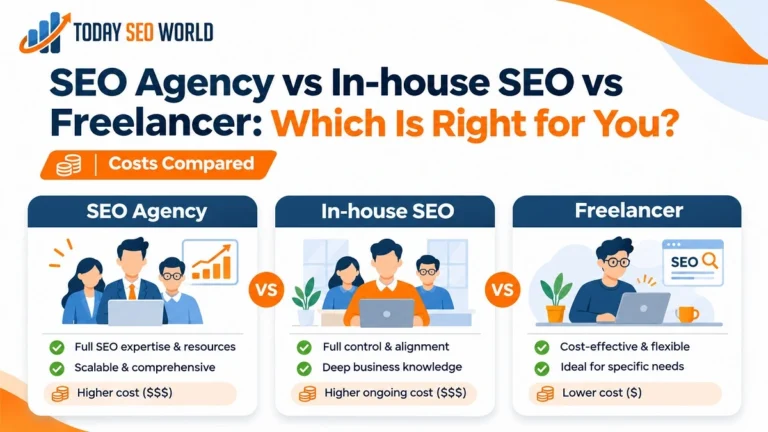
If you’d rather get expert help, compare GEO agencies that focus on AI citations and brand mentions, or AEO agencies that specialize in answer-focused content. Many AI SEO agencies offer all three.
How to Optimize for SEO, AEO and GEO Together
One plan covers all three. Work through these steps in order, because each one depends on the one before.
- Get the technical basics right. Make sure your important pages are indexed in Google and Bing. Check that robots.txt, your firewall or your CDN doesn’t block Googlebot, Bingbot, OAI-SearchBot, PerplexityBot or Claude-SearchBot.
- Map the questions your audience asks. Use Search Console queries, People Also Ask boxes, sales calls and customer emails, then group the questions by topic.
- Answer first. Give a direct one- or two-sentence answer under each question heading, then add detail, examples and steps.
- Add what only you have. Original data, prices, case studies, expert quotes and first-hand experience give AI tools something worth citing.
- Cite sources and use specific numbers. Named sources and exact figures make your content easier to trust and to quote.
- Structure pages clearly. Use descriptive headings, short paragraphs, lists and tables, plus structured data for your organization, articles and products.
- Keep brand facts consistent. Use the same name, description, services and contact details on your website, social profiles, Google Business Profile and directory listings.
- Earn genuine mentions. Publish research others want to quote, contribute to industry publications and collect reviews. Google warns that “seeking inauthentic ‘mentions’ across the web isn’t as helpful as it might seem.”
- Keep content up to date. Review key pages regularly, refresh facts and prices, and show a “last updated” date.
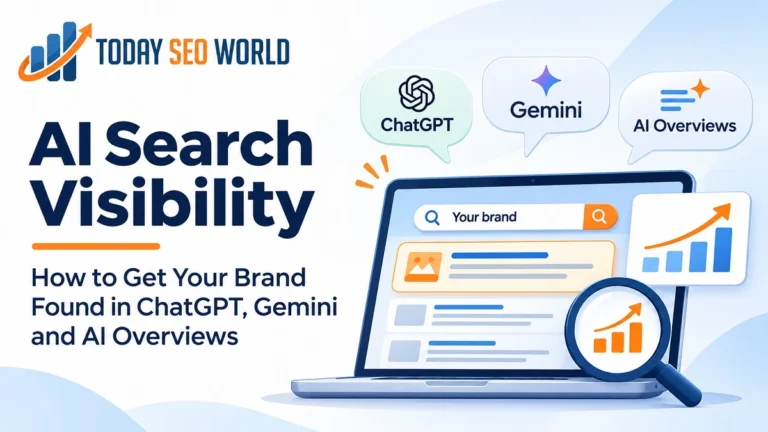
Our guide to AI search visibility explains the GEO steps in more detail, including how ChatGPT, Gemini, Perplexity and Copilot choose their sources.
How to Measure SEO, AEO and GEO
| What to measure | Where to find it |
| Rankings, impressions and clicks | Performance reports in Google Search Console and Bing Webmaster Tools |
| Featured snippets and People Also Ask | Rank tracking tools that track SERP features |
| Impressions in AI Overviews, AI Mode and Discover | Search Console’s generative AI performance reports |
| Citations in Copilot and Bing AI answers | Bing Webmaster Tools’ AI Performance report |
| Visits from AI tools | GA4 referral traffic from sources such as chatgpt.com and perplexity.ai |
| Brand mentions in ChatGPT, Gemini and Perplexity | Regular prompt checks, a ChatGPT visibility tracker or other AI SEO tools |
Google rolled out its generative AI performance reports to all websites worldwide in August 2026. They show impressions, not clicks, and sites with very few AI impressions may not see a report yet. Bing’s AI Performance report launched in public preview in February 2026 and shows how often AI answers, including Copilot’s, cite your content.
Search Console also has a Search generative AI control that removes your site from AI Overviews, AI Mode and Discover’s generative AI features. If AI visibility matters to you, make sure you haven’t opted out by mistake.
Common Myths About GEO and AEO
- “SEO is dead.” AI search tools still find, judge and cite web pages, so SEO remains the foundation for both AEO and GEO.
- “You need an llms.txt file.” Google says its AI features need no special files or markup, and llms.txt gets no special treatment in Google Search.
- “You must split content into small chunks for AI.” Google says there’s “no requirement to break your content into tiny pieces for AI to better understand it.”
- “Keyword stuffing works on AI tools.” The GEO research found it gave little to no improvement in AI answers.
- “GEO and AEO need a separate team.” The people who already handle your content, technical SEO and digital PR can usually cover them, with AI visibility added to your reporting.
Find GEO, AEO and SEO Experts
Ready to improve how your brand shows up in search and AI answers? Explore our AI search optimization hub for agencies, tools and AI platforms, or browse SEO agencies if you want to strengthen your search foundations first.
Run an agency that offers GEO, AEO or SEO services? Get your agency listed so businesses looking for help can find you.